Home Depot Truckloads: What's in the Tools, Plumbing and Electrical Mix
Home Depot Truckloads: What's in the Tools, Plumbing and Electrical Mix
If you run a hardware store, a booth at a flea market or a discount shop, a pallet of drills and faucets sounds like an easy win. The harder question is what is actually on the truck. Buy blind and you can end up with 40 pallets of stuff you can't move at your price point.
This post walks through what a Home Depot liquidation truckload typically holds, how the condition runs, and which kinds of resellers tend to do well with it. Use it to decide whether a load fits your customers before you spend a dollar on freight.
What a Home Depot liquidation truckload actually is
A load like this is a full trailer of home improvement goods that a retailer or its supply chain has moved out of the normal sales channel. Typical sources include customer returns, overstock, seasonal leftovers, discontinued items and shelf pulls. That means the contents are mixed by nature. You are not buying a clean case-packed order from a manufacturer.
Most buyers sell the goods as they come out of the box: tested, cleaned up a bit and priced to move. If you want to see how these loads are put together and what is available now, start with our home depot truckloads page, then come back here for the details on what to expect.
The tools, plumbing and electrical mix
Exact contents change from load to load, so treat what follows as a typical pattern and not a promise. The bulk of a hardware-focused load usually falls into three families.
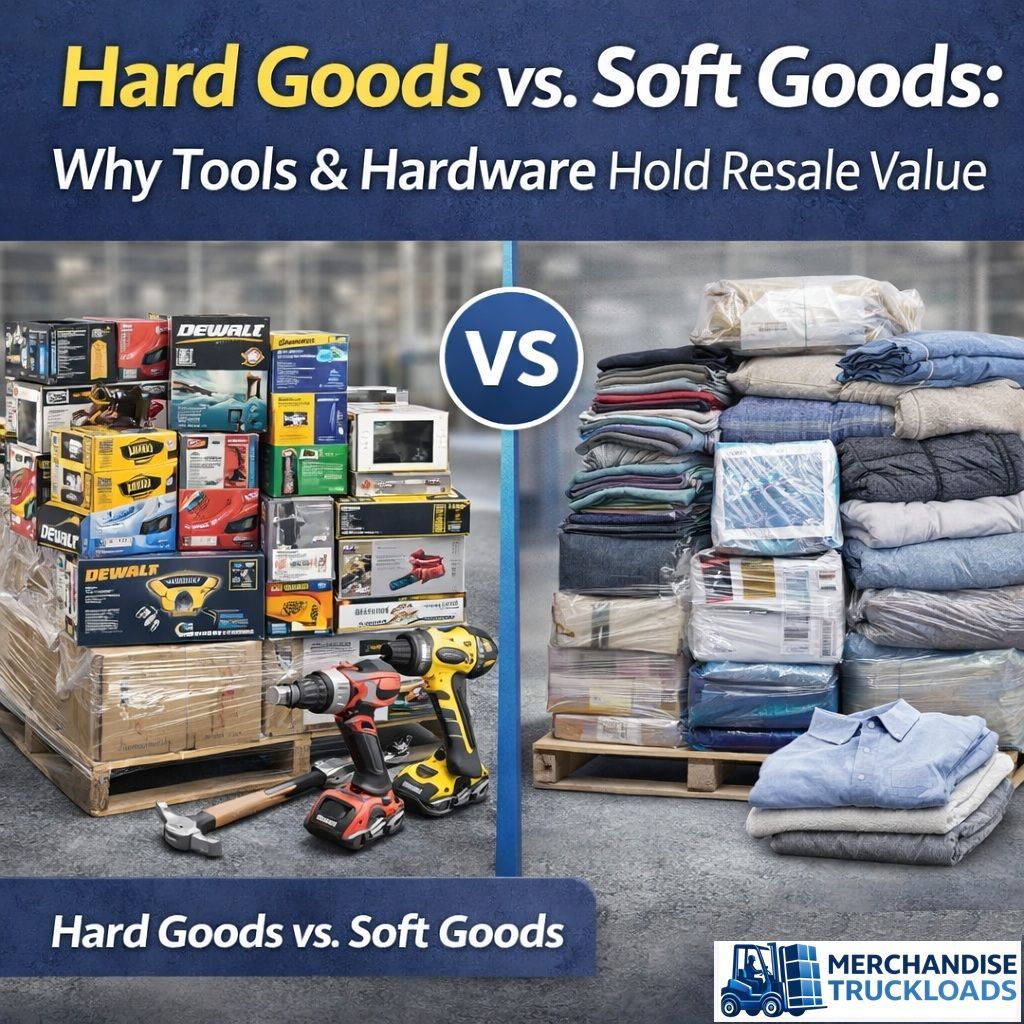
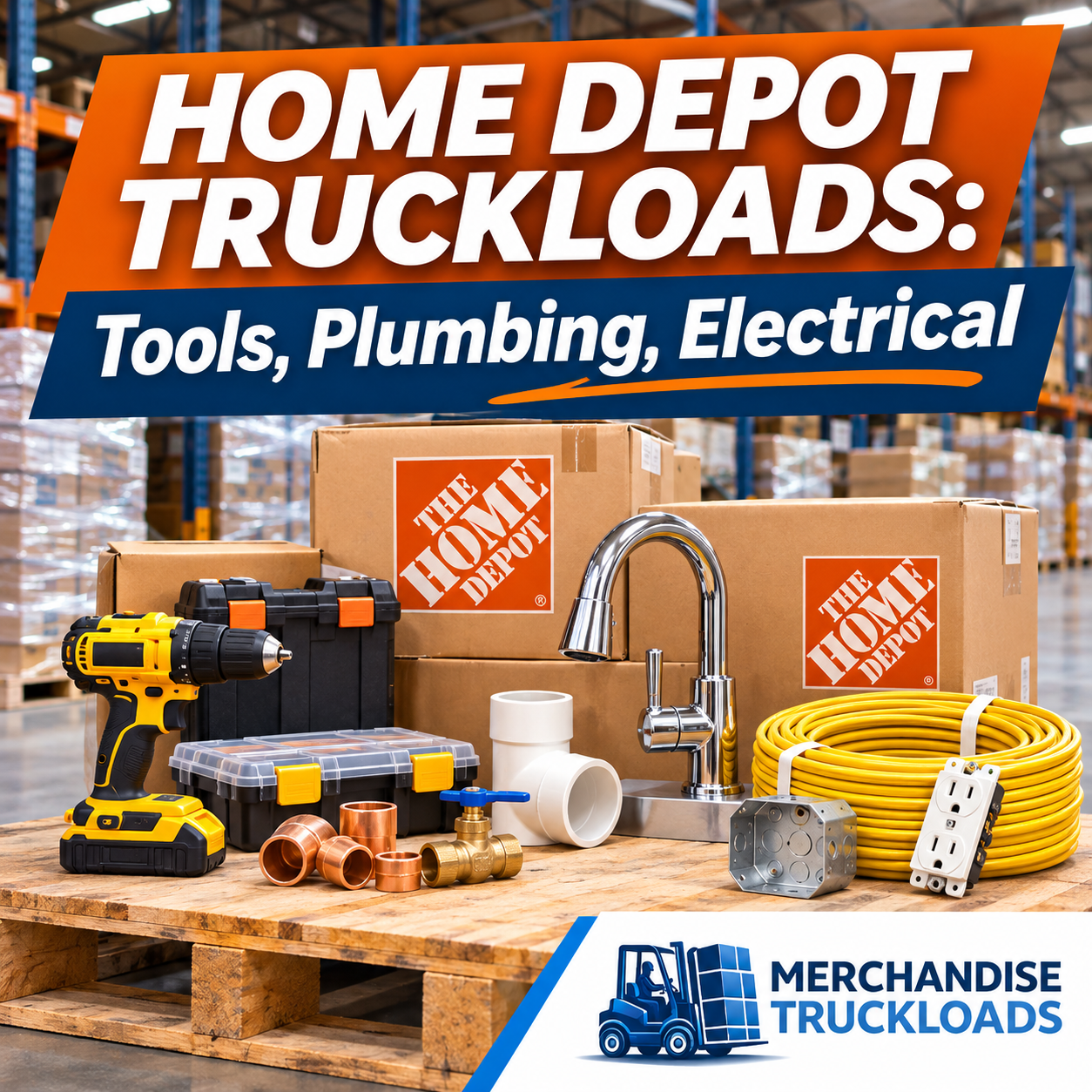
Tools. Think cordless drills, drivers, saws, sanders, hand tool sets, tool storage, work lights, measuring gear and accessories like bits, blades and clamps. Corded and cordless power tools are the highest-value pieces, while hand tools and accessories fill in the volume.
Plumbing. Expect faucets, shower heads, supply lines, fittings, valves, toilet parts, water filters, utility sinks and the occasional water heater component. Plumbing tends to be bulky for its value in some cases and tiny and easy to bin in others.
Electrical. This usually covers light fixtures, ceiling fans, bulbs, switches, outlets, extension cords, breakers, smart home devices and fan or lighting kits. Small electrical items are fast sellers at flea markets because buyers can grab them on impulse.
Around those three you will often see some paint sundries, hardware fasteners, garage and storage items, and a few outdoor or seasonal pieces. Mix varies, so check the current truckload specials to see what is listed and how each load is described.
Condition range: what you will really be sorting
Condition is where margin is made or lost. In a returns-heavy load you will usually find a spread like this: some items new in box, some open box and complete, some used but working, and some incomplete, damaged or dead on arrival. The proportions depend on the source and the category.
Power tools show the widest swing. A drill sold with no battery or charger is a different product than the kit it came in. Plumbing fixtures often arrive with missing hardware. Electrical items can be fine cosmetically but untested, so plan to plug in, power up and spot check before pricing.
Build three piles at receiving: sell as is, sell after a quick fix or kit-up, and parts or scrap. Pricing each pile differently keeps you from discounting your good stock to match your worst.
Who this kind of load suits
Hardware and farm-supply stores can use a load to widen the bargain aisle. Your customers already shop for these items, so they understand the brands and the pricing, and you can add a clearance wall without touching your core inventory.
Flea market and swap meet sellers do well with the small stuff: hand tools, bits, bulbs, fittings, fixtures and cordless tool bundles. Tools draw foot traffic, and a good table of name-brand tools gets people to stop.
Discount retailers can mix these goods with general merchandise and sell by the piece or by the bin. If you also stock household goods, compare this with target merchandise truckloads, which lean toward home, seasonal and everyday items instead of contractor-style hardware.
It is a weaker fit if you have no room for bulky freight, no way to test electrical goods, or customers who only buy in the cheapest price band. Heavy fixtures and water heater parts take space and rarely sell fast at a flea market.
A worked example with made-up numbers
Here is a simple example to show how to think about the math. These figures are illustrative only and not a quote or a prediction.
Say a load has a manifest retail value of $40,000 and you pay $10,000 delivered. After sorting, suppose 60% of the retail value sells at about half of retail, 25% sells at about a quarter of retail, and 15% ends up as parts or scrap with no sales value.
That works out to roughly $12,000 from the first group ($24,000 times 50%) and $2,500 from the second ($10,000 times 25%), or about $14,500 in total sales. Subtract the $10,000 you paid and you have about $4,500 before booth fees, labor, packaging and any returns you take back. That is workable, but it is not a windfall, and it shows why the sort and the sell-through rate matter more than the headline retail value.
Scott’s Rule: Scott's rule: figure out what you can sell the middle of the load for, because the top 10% of items will not carry a bad deal.
Freight, space and receiving
A full truckload means a full trailer, usually palletized and delivered to a dock or a location with a lift gate or forklift. Before you commit, confirm you have somewhere to put 20-plus pallets and a plan for unloading. If you do not have a dock, tell the carrier up front, because it changes the delivery setup and sometimes the price.
Delivery cost is a real part of your margin on heavy goods like plumbing fixtures and tool storage. To see what your own landed cost would be, get a freight quote for your zip code before you compare loads.
How to decide if a Home Depot load fits you
Run through a short checklist. Do your customers buy tools, plumbing and electrical already? Can you test and sort goods within a few days of delivery? Do you have the space and a way to move heavy freight? Can you live with a share of the load being parts or scrap?
If you answer yes to most of those, a Home Depot liquidation truckload is probably worth a closer look. If you mostly say no, a lighter general merchandise load may suit you better. Either way, read the manifest notes, ask about the condition mix, and buy the size of load you can sell through in a reasonable window.
About Scott M.
Scott M. is an industry expert in wholesale liquidation and supply chain logistics. With years of experience in the secondary market, he helps retailers and resellers navigate the complexities of buying merchandise by the truckload.
Recent Posts