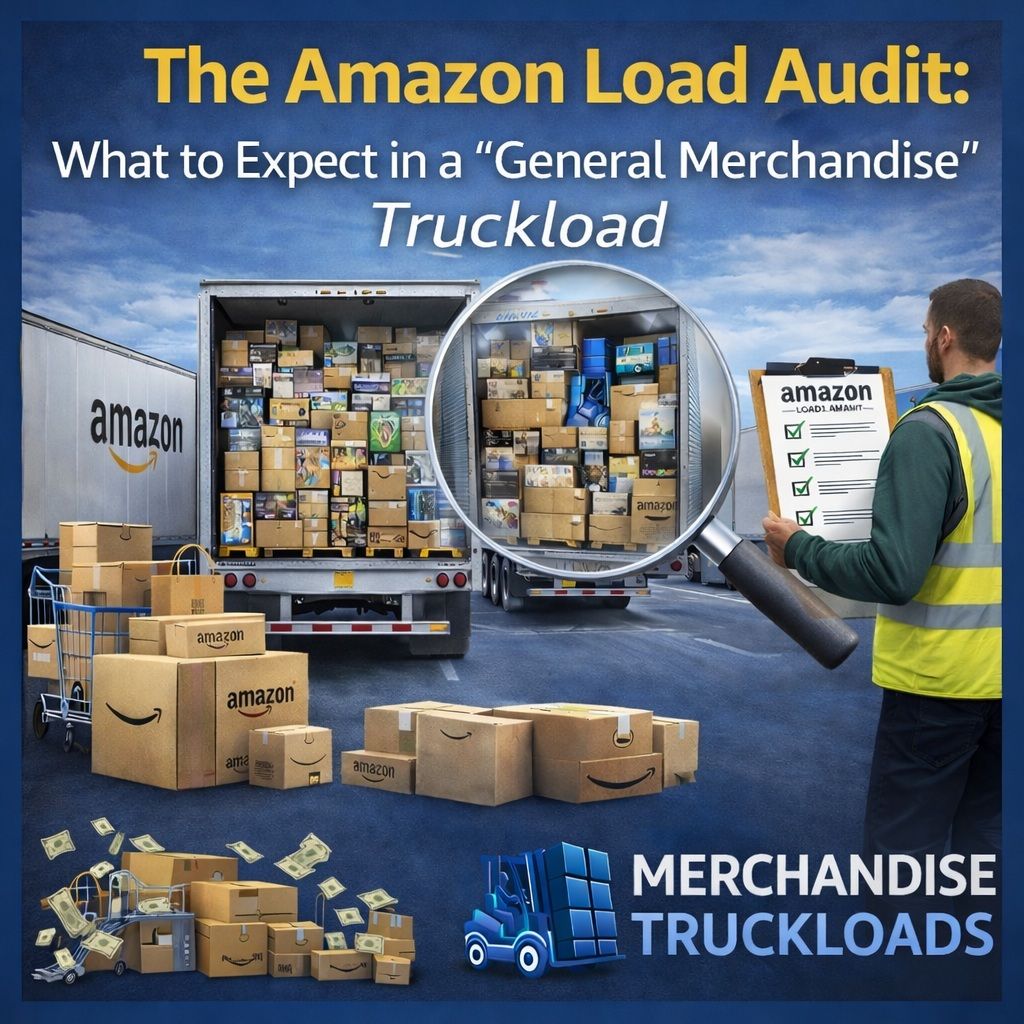
The Amazon Load Audit: What to Expect in a "General Merchandise" Truckload
The Amazon Load Audit: What to Expect in a "General Merchandise" Truckload
When you pull the seal on a fresh Amazon trailer, you aren't just looking at boxes; you're looking at a cross-section of consumer demand. Navigating general merchandise truckloads requires a keen eye for "category density" to ensure your resale margins stay protected.
I’m Scott M., and in the 2026 liquidation landscape, "General Merchandise" (GM) remains the king of variety. Whether you are stocking a bin store or an e-commerce warehouse, understanding the ratio of high-demand home goods to smaller "filler" items is the first step in a successful audit.
Defining the "General Merchandise" Mix
In a standard Amazon GM load, you can expect a mix of everything from small appliances and electronics to toys and kitchen gadgets. The "audit" starts by checking our truckload specials to see if the load is "Big Box" or "Small Box" dominant. High-cube loads with large items offer lower unit counts but higher individual price points, whereas "Small Box" loads are the bread and butter of high-volume bin stores.
Manifest vs. Unmanifested Reality
While some loads come with a digital footprint, many of the best deals are raw and unmanifested. As we explain in our truckloads explained guide, an unmanifested load is often where the highest ROI sits because you aren't paying a premium for the labor of counting the items. You are buying the "potential" of the load at a lower cost-per-pound or cost-per-pallet.
The Triage: Sorting for Maximum Recovery
A successful Amazon audit involves immediate sorting. Set up three zones in your warehouse: "New/Shelf Pull" for premium resale, "Open Box" for testing, and "Bulk/Salvage" for quick liquidation. GM loads are famous for having "High-Velocity" items that can be flipped within 48 hours to pay off the freight costs of the entire truck.
Seasonal Shifts in Amazon Loads
In 2026, savvy buyers track the calendar. Post-holiday GM loads will be heavy on tech and gift returns, while Q2 loads often feature housewares and outdoor gear. Aligning your truckload purchase with local demand ensures that your general merchandise doesn't sit on the shelf, keeping your cash flow fluid.
Final Verdict
The Amazon General Merchandise load is the ultimate "everything" play. It provides the variety needed to keep a retail store fresh and the volume required to scale. If you're ready to move beyond single pallets and want the raw, high-margin potential of a full trailer, it’s time to audit your sourcing strategy and go bulk.
About Scott M.
Scott M. is an industry expert in wholesale liquidation and supply chain logistics. With years of experience in the secondary market, he helps retailers and resellers navigate the complexities of buying merchandise by the truckload.
Recent Posts